
Getting your garage door ready for winter in Callahan isn't about freezing pipes or snow load — it's about repairing what hurricane season and months of humidity already did to your door, before cooler, drier weather sets in. That means checking for rust, swelling, loosened hardware, and worn seals now, while the weather is calm enough to actually work on it.
Why "winterizing" looks different here
Homeowners in colder states worry about ice jamming tracks or extreme cold snapping springs. That's not the Callahan problem. Your garage door has spent the last several months dealing with hot, humid air, afternoon downpours, and possibly a storm or two with wind-driven rain. Winter here is actually the easier season on garage door hardware — mild and drier. The real work right now is inspection and recovery: catching the damage that built up over summer and early fall before it turns into a spring or opener failure in January.
Check for storm-season wear first
Before you do anything else, walk around the door and look it over with fresh eyes.
- Panel dents or cracks from wind-driven debris during storms. Even small dents can throw off the door's balance over time.
- Track alignment — heavy wind pressure during a storm can nudge a track slightly out of true, which shows up as a door that rattles, binds, or runs off-track.
- Loose hardware — bolts, hinges, and roller brackets can work themselves loose from vibration during high winds. A quick pass with a wrench on visible bolts is worth ten minutes.
If your door has wind-load-rated bracing or struts, check that they're still properly seated. Wind load hardware does its job during a storm by flexing and resisting pressure, and that stress can loosen fasteners even when nothing looks obviously wrong.
Rust and corrosion don't wait for winter
Florida humidity is hard on metal year-round, and if you're closer to the coast — Fernandina Beach, Amelia Island, Yulee — salt air speeds up corrosion on springs, hinges, and track hardware even faster. Look for:
- Orange or reddish discoloration on springs, especially near the coils
- Pitting or flaking on hinges and the track itself
- Stiff or squeaky rollers that don't move freely
A rusted spring isn't just noisy — it's weaker and more likely to snap without warning, usually at the least convenient moment. If you catch surface rust early, a wire brush and a light coat of lubricant can buy time. Heavier pitting means the spring's integrity is already compromised and replacement is the safer call.
Lubricate everything that moves
After a summer of humidity, moving parts tend to either gum up or dry out, depending on what's gotten into them. Hinges, rollers, the torsion spring, and the track itself should get a garage-door-specific lubricant (not WD-40, which is a solvent and actually strips lubrication over time). Work the door up and down a few times after applying it so the lubricant gets into the moving parts, not just the surface.
Listen while you do it
Grinding, popping, or a loud bang on opening or closing are all signs something beyond normal wear is going on — often a spring issue. Don't ignore a noise just because the door still opens; springs rarely fail with a lot of warning.
Weatherstripping and seals
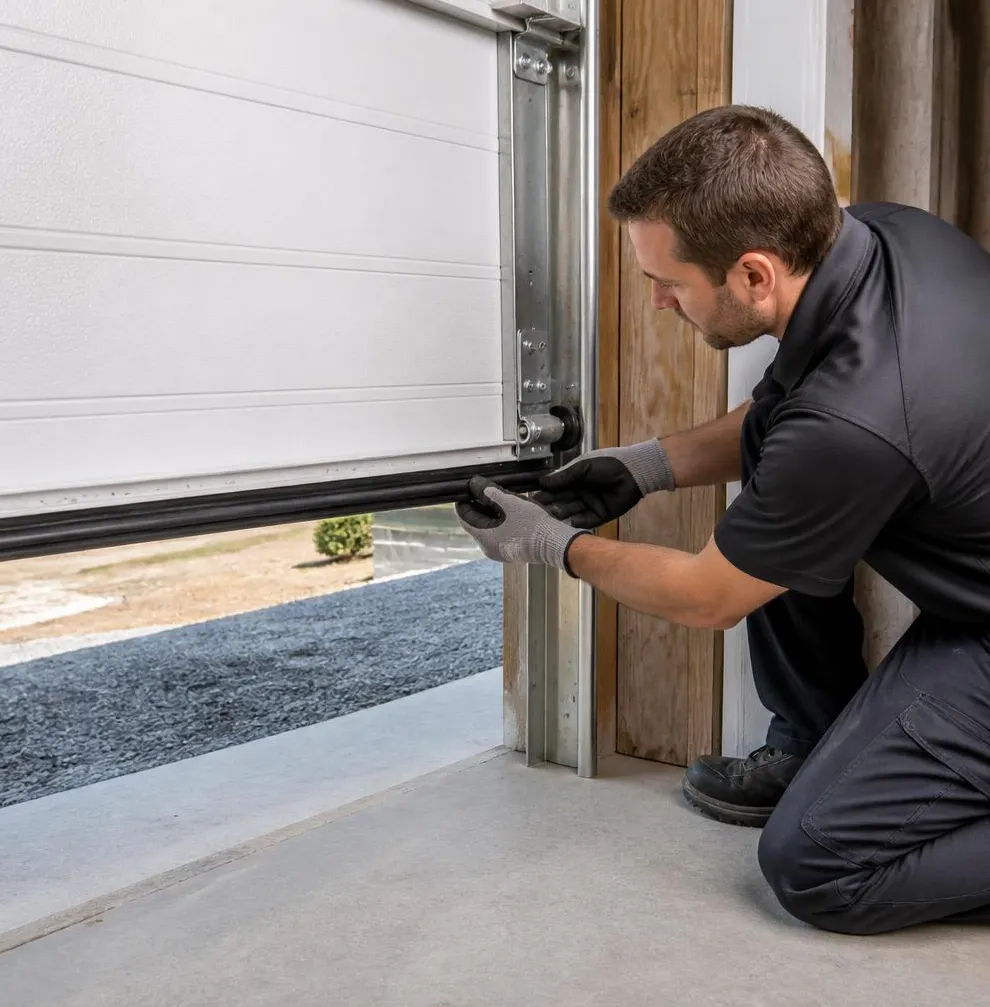
Constant humidity and heat cause the rubber seal along the bottom of the door — and sometimes the side weatherstripping — to swell, crack, or pull away from the track. A swollen seal can drag on the ground, catch debris, or let water and pests into the garage during the next heavy rain. Run a hand along the full length of the bottom seal; if it feels brittle, cracked, or noticeably misshapen, it's due for replacement. This is also a good time to check for gaps where humid air, dust, or small pests have been getting in all summer.
Test the opener and safety sensors
Heat and moisture are tough on garage door opener electronics too. Before winter, confirm:
- The auto-reverse safety feature actually works — place a block of wood in the door's path and make sure it reverses on contact
- The photo-eye sensors near the bottom of the track are aligned and free of dust or spiderwebs (common after a humid summer)
- The remote and keypad still respond reliably — battery corrosion from humidity is a common, overlooked cause of weak signal
If your opener has been struggling or making unusual noises, it's worth addressing now rather than waiting for a cold snap when you're relying on it more to keep the garage sealed up.
When to call Callahan Door & Opener
Some of this is a Saturday-morning DIY job. But if you're seeing a rusted or visibly damaged spring, a door that's off track, or an opener that's not responding reliably, it's time to call in a technician rather than keep testing it yourself — a failed spring under tension can cause real injury. Callahan Door & Opener handles garage door spring repair and off track door repair throughout Callahan and the surrounding Nassau County area, and can do a full inspection to catch anything storm season left behind before it becomes a bigger problem.
If you're in Callahan, Hilliard, Yulee, Fernandina Beach, Bryceville, Nassau Village-Ratliff, Jacksonville's Northside, or Amelia Island and your garage door needs a pre-winter once-over, give Callahan Door & Opener a call — we'll get it running safely and smoothly before the season turns.